Introduction
The rise of online lending has made it easier than ever for Americans to access personal loans from the comfort of their homes. However, this convenience has also opened the door to a growing number of fake loan offers designed to deceive unsuspecting borrowers. Scammers prey on individuals who need money quickly, often targeting those with poor credit or limited financial knowledge.
Understanding the warning signs of loan scams is essential for protecting your personal information and finances. In this guide, we’ll help you identify the red flags of fraudulent loan offers and show you how to connect with legitimate lenders safely.
Table of Contents
What Are Fake Loan Offers?
Fake loan offers are fraudulent schemes created by scammers posing as legitimate lenders. These criminals use convincing websites, emails, and phone calls to trick borrowers into sharing sensitive information or sending money upfront.
How scammers target borrowers:
- They advertise “guaranteed approval” loans on social media and search engines
- They send unsolicited emails or text messages promising fast cash
- They create fake websites that mimic real lending companies
- They exploit borrowers facing financial emergencies or bad credit situations
Common scam tactics include identity theft, advance fee fraud, and phishing schemes designed to steal your banking details or Social Security number.
Major Red Flags of a Fake Loan Offer
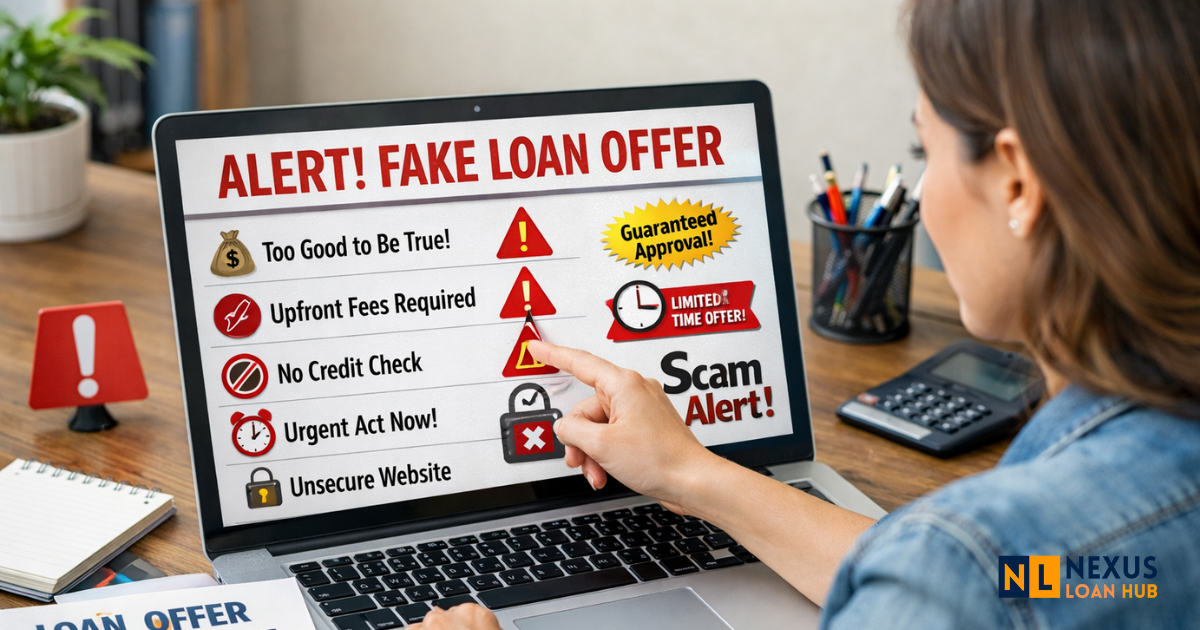
Guaranteed Approval with No Credit Check
Legitimate lenders always assess your creditworthiness before approving a loan. If a company promises guaranteed approval regardless of your credit history, it’s a major loan scam warning sign. Real lenders need to evaluate risk, and responsible lending includes credit verification.
Requests for Upfront Fees or Payments
One of the clearest personal loan scam red flags is when a lender asks for payment before you receive your loan. Scammers often request “processing fees,” “insurance deposits,” or “verification charges” via wire transfer, prepaid debit card, or cryptocurrency. Legitimate lenders deduct fees from your loan amount—they never ask for money upfront.
No Physical Address or Company Verification
Trustworthy lenders operate with transparency. If you cannot find a physical business address, valid phone number, or verifiable company registration, proceed with extreme caution. Avoid fake lenders by researching the company’s licensing status with your state’s financial regulatory agency.
Unsecured or Suspicious Website Links
Check the lender’s website carefully. Online loan fraud often involves poorly designed websites with spelling errors, missing privacy policies, or non-secure URLs (look for “https://” and a padlock icon). Professional lenders invest in secure, well-maintained websites.
Pressure to Act Quickly
Scammers create artificial urgency to prevent you from thinking critically. Phrases like “limited time offer,” “apply now or lose this opportunity,” or “funds available today only” are tactics to rush your decision. How to spot loan scams includes recognizing this high-pressure sales approach.
Poor Grammar or Suspicious Communication
Legitimate companies employ professional communicators. If you receive emails or texts with obvious spelling mistakes, awkward phrasing, or grammatical errors, it’s likely a scam. Also beware of communications from generic email addresses rather than company domains.
Requests for Sensitive Information Like Passwords
No legitimate lender will ever ask for your online banking password, PIN, or Social Security number via email or text. If someone requests this information through unsecured channels, it’s identity theft in progress.
Unrealistically Low Interest Rates
While competitive rates exist, offers that seem too good to be true usually are. Compare advertised rates with current market averages. Significantly lower rates without explanation indicate potential fraud.
How Borrowers Can Verify a Legitimate Loan Lender
Protecting yourself requires due diligence:
Check company registration: Verify the lender is registered with your state’s Department of Financial Institutions and has proper licensing.
Review lender transparency: Legitimate lenders clearly display their terms, fees, and contact information. They provide detailed loan agreements before you commit.
Read customer reviews: Search for independent reviews on trusted platforms like the Better Business Bureau, Trustpilot, or Consumer Financial Protection Bureau complaint database.
Confirm loan terms and disclosures: Real lenders provide Truth in Lending Act disclosures, including APR, repayment terms, and total loan costs.
Ensure state lending compliance: Legitimate loan lenders USA operate within state-specific lending laws and regulations.
How Nexus Loan Hub Helps Borrowers Connect With Trusted Lending Partners
Nexus Loan Hub serves as a safe online borrowing platform that connects borrowers with vetted lending partners. Rather than being a direct lender, we provide a loan matching service that helps you compare multiple offers from legitimate companies.
Our platform prioritizes borrower safety by partnering only with licensed lenders who meet strict compliance standards. You can review terms, compare interest rates, and make informed decisions without pressure or hidden fees.
The transparent matching process allows you to explore options suited to your financial situation while maintaining control over your personal information.
Responsible Borrowing Tips
Even when working with legitimate lenders, practice smart borrowing habits:
- Read loan agreements thoroughly before signing anything
- Compare multiple offers to ensure you’re getting fair terms
- Avoid rushed financial decisions—take time to understand all costs
- Calculate whether you can afford the monthly payments alongside your other expenses
- Ask questions about anything you don’t understand in the loan terms
Take the Next Step Toward Safe Borrowing
Protecting yourself from fake loan offers starts with knowledge and vigilance. Now that you understand the warning signs, you can confidently navigate the lending landscape.
Ready to explore legitimate loan options? Visit Nexus Loan Hub today to connect with trusted lending partners who prioritize transparency and compliance. Our secure platform makes it easy to compare offers and find the right loan for your needs—without the worry of scams or fraud.
[Learn more about safe borrowing practices] | [Compare personal loan offers now]
Frequently Asked Questions
How can I tell if a loan company is legitimate?
Verify the company’s state licensing, check their physical address and phone number, read independent customer reviews, and confirm they follow Truth in Lending Act disclosure requirements. Legitimate companies are transparent about fees and never guarantee approval without reviewing your application.
Are upfront loan fees a scam?
Yes, legitimate lenders never require payment before disbursing your loan. Any request for advance fees, processing charges, or insurance deposits is a red flag indicating fraud. Real lenders deduct origination fees from your loan proceeds.
What should I do if I receive a suspicious loan offer?
Do not provide personal information or send money. Report the suspected scam to the Federal Trade Commission at ReportFraud.ftc.gov, your state attorney general’s office, and the Consumer Financial Protection Bureau. Block the sender and delete the communication.
Can fake lenders steal personal information?
Absolutely. Scammers use fake loan applications to collect Social Security numbers, bank account details, and other sensitive data for identity theft. Only share personal information with verified, licensed lenders through secure websites.
How does Nexus Loan Hub help borrowers stay safe?
Nexus Loan Hub partners exclusively with licensed, compliant lenders and provides a secure platform for comparing loan offers. We never charge upfront fees, and our matching process helps you make informed decisions by reviewing multiple options from trustworthy companies.
Disclaimer: Nexus Loan Hub is a free loan matching service that connects borrowers with participating lenders. We are not a lender and do not make credit decisions. Rates, terms, and availability vary by lender and creditworthiness. Not all applicants will qualify for a loan or advertised rates and terms. Loans are subject to credit approval and verification. Funding times may vary depending on verification requirements and lender policies. Available in most states – some restrictions may apply based on state regulations.